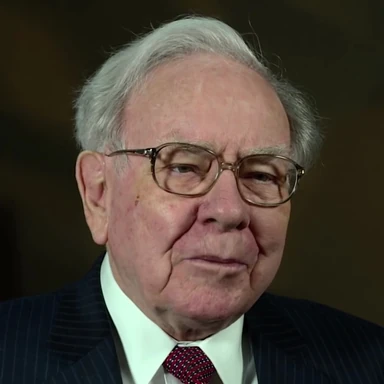
Who is Warren Buffett?
Warren Buffett built his investing identity around owning businesses rather than predicting their next share-price move. His Berkshire Hathaway shareholder letters explain that approach in public, covering competitive advantages, capital allocation and the difference between accounting earnings and cash available to owners.
How the method works
Begin inside your circle of competence. Understand the customer, economics and durability of the business. Estimate the cash it can distribute after spending enough to maintain its position, then compare that estimate with the price. A familiar brand is a starting point; it is not a valuation.
What makes the approach distinctive
See’s Candies illustrates the attraction. Berkshire’s 2007 letter describes a business bought for $25 million in 1972 that had generated $1.35 billion in cumulative pretax earnings by 2007 while requiring relatively little additional capital. The lesson is the combination of customer loyalty and modest reinvestment needs.
Use the playbook to explain one company in plain language. Record maintenance spending, a range of owner earnings and evidence supporting its advantage. Write down what would undermine that advantage before deciding the stock is cheap.Trendstockers takeaway, not an investor quotation
Where it can go wrong
Durability is an estimate, not a permanent property. Competition, changing habits and overpayment can damage an otherwise sound investment. Our worksheet helps organize your assumptions; it cannot reproduce Buffett’s judgment or Berkshire’s financing advantages.
Read the original sources
Follow the underlying material and form your own view.
- Berkshire 2007 shareholder letter: See’s Candies ↗
- Berkshire 1986 shareholder letter: owner earnings ↗
- Berkshire 1996 shareholder letter: business quality and value ↗
Sources behind the facts · 1 additional
Additional references for sourced investor facts in Terminal. These are not claims of verbatim quotations.