When the Machines No Longer Need Us
The unsettling question about AI is who holds the power if fewer people are needed to produce the wealth. A thought experiment about machines, ownership and the bargaining power of ordinary workers.
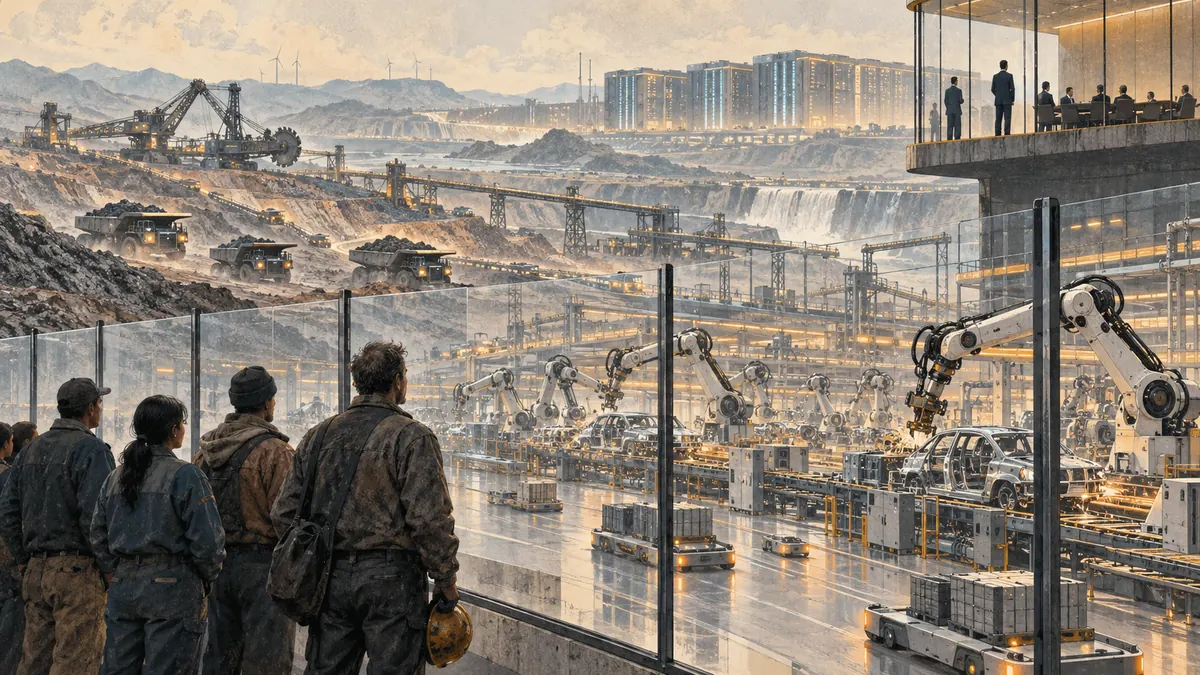

The unsettling question about AI is who holds the power if fewer people are needed to produce the wealth. A thought experiment about machines, ownership and the bargaining power of ordinary workers.
The people who own production still need people to run it. What happens if that bargain weakens?
That is the question at the centre of this essay. Imagine AI and robotics becoming capable enough to perform much of the work that keeps an economy running. The consequence would reach beyond lost jobs. It could change how much leverage ordinary people have over the owners of the system.
A wage is also a source of leverage
Workers do more than receive money. They supply skills, keep operations moving and possess knowledge an employer needs. That dependence gives them something to negotiate with.
Now imagine factories, mines, farms and transport networks that need far fewer people. Their owners still need customers, infrastructure and a functioning society. But their dependence on any particular workforce could become much smaller.
The uncomfortable possibility is that productive capacity keeps growing while the bargaining power of the people around it falls. More output would not automatically mean more independence or security for everyone. Ownership would determine who receives the gains.
Follow the things the machines need
An automated economy would still have physical requirements. Electricity. Chips. Metals. Land. Water. Factories. Transport. Data centres. Someone would own or control access to them.
In this scenario, the decisive question becomes who owns those assets when automation matures. If ownership is widely distributed, the benefits could spread. If it concentrates, a productive society could still leave many people dependent on decisions made by a very small group.
That is why the ownership question deserves attention before the technology reaches its full potential. By the time a transition is complete, the most important bargains may already have been struck.
The darkest version of the argument
Push the thought experiment further. In a heavily automated economy, even a catastrophic loss of workers might destroy less productive capacity than it would in an economy dependent on their labour. Machines might continue producing while ownership of the surviving assets remains intact.
That possibility is disturbing. It is a hypothetical consequence of extreme automation, not evidence that anyone is planning depopulation or that war would cease to threaten the owners themselves. Infrastructure, demand, institutions and security could collapse with it.
The useful question is how technology might alter incentives and restraints. If powerful people need fewer workers, what institutions ensure they still have obligations to the people living around their assets?
Who gets a stake in the future?
A society can debate how many jobs AI might replace and still miss the larger issue. Who will own the businesses that replace them? Who has access to the tools? Can new competitors enter, or do the same owners control the energy, infrastructure and distribution?
An automated future could bring abundance. It could also concentrate power in ways that are difficult to reverse. The difference depends on ownership, competition and the rules people establish while they still have leverage.
The machines do not have to become our enemies for the transition to go badly. They only have to become indispensable to a system in which too few people have a stake.